ألواح LED مرنة للإضاءة الخلفية للحجر | DENO للإضاءة
لوح LED هو لوح مرن للإضاءة الخلفية وليس شريطًا: تبلغ أبعاده 480x240mm، ويمكن قصه وفق شبكة، ويُستخدم خلف الحجر والأونيكس وواجهات صناديق الإضاءة. تصنّع DENO إصدارات بجهد 12V و24V تحافظ على تجانس الإضاءة بدءًا من عمق تجويف يبلغ نحو 20mm.
طرازات لوح LED مرن والمواصفات الرئيسية (11)
طرازات لوح LED مرن 24V (10)
6105 — 2835 · 50 LEDs/m · 24V
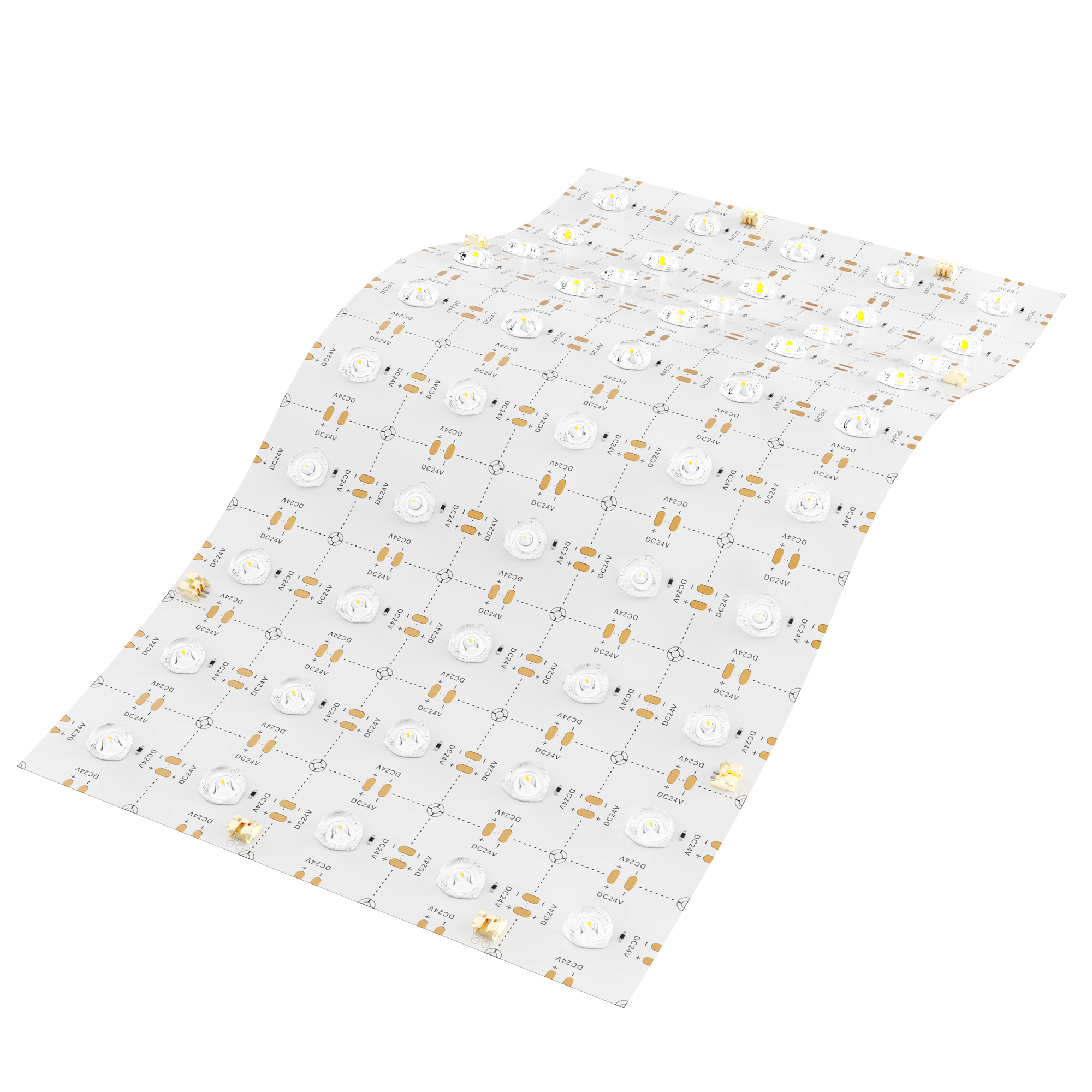
LED Type: 2835 · LED Density: 50 LEDs/pcs · Voltage: DC 24V · Power: 12~60W · Cutting Unit: 1LED/48*48mm · PCB Width: 240x480mm · Copper Foil: 3oz · Circuit Type: CV · IP Rating: IP20
6432 — 5050 · 288 LEDs/m · 24V
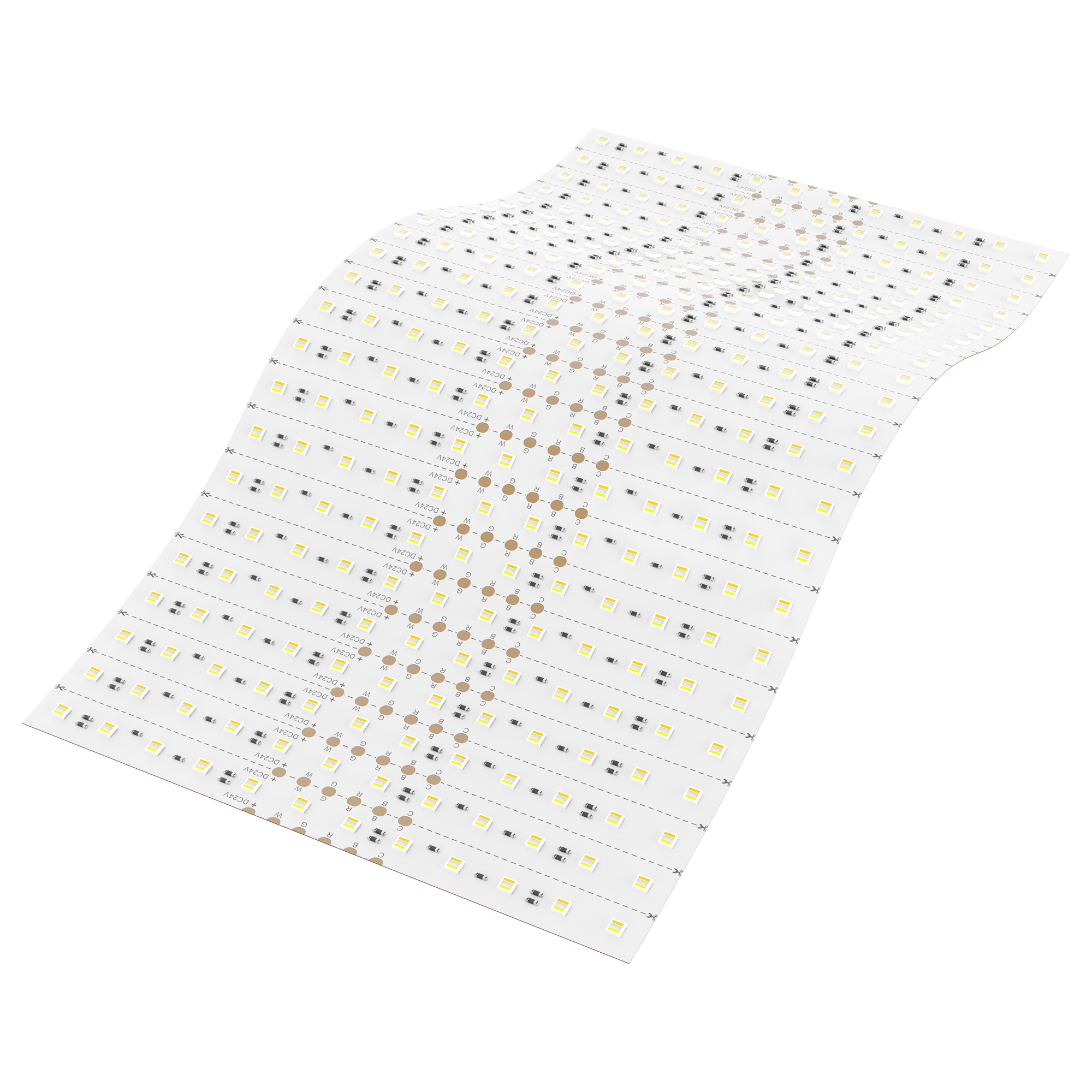
LED Type: 5050 · LED Density: 288 LEDs/pcs · Voltage: DC 24V · Power: 20~110W(1pcs) · Cutting Unit: 12LEDs/20*240mm · PCB Width: 240x480mm · Copper Foil: 2oz · Circuit Type: CV · IP Rating: IP20
10567 — 6060 · 50 LEDs/m · 24V
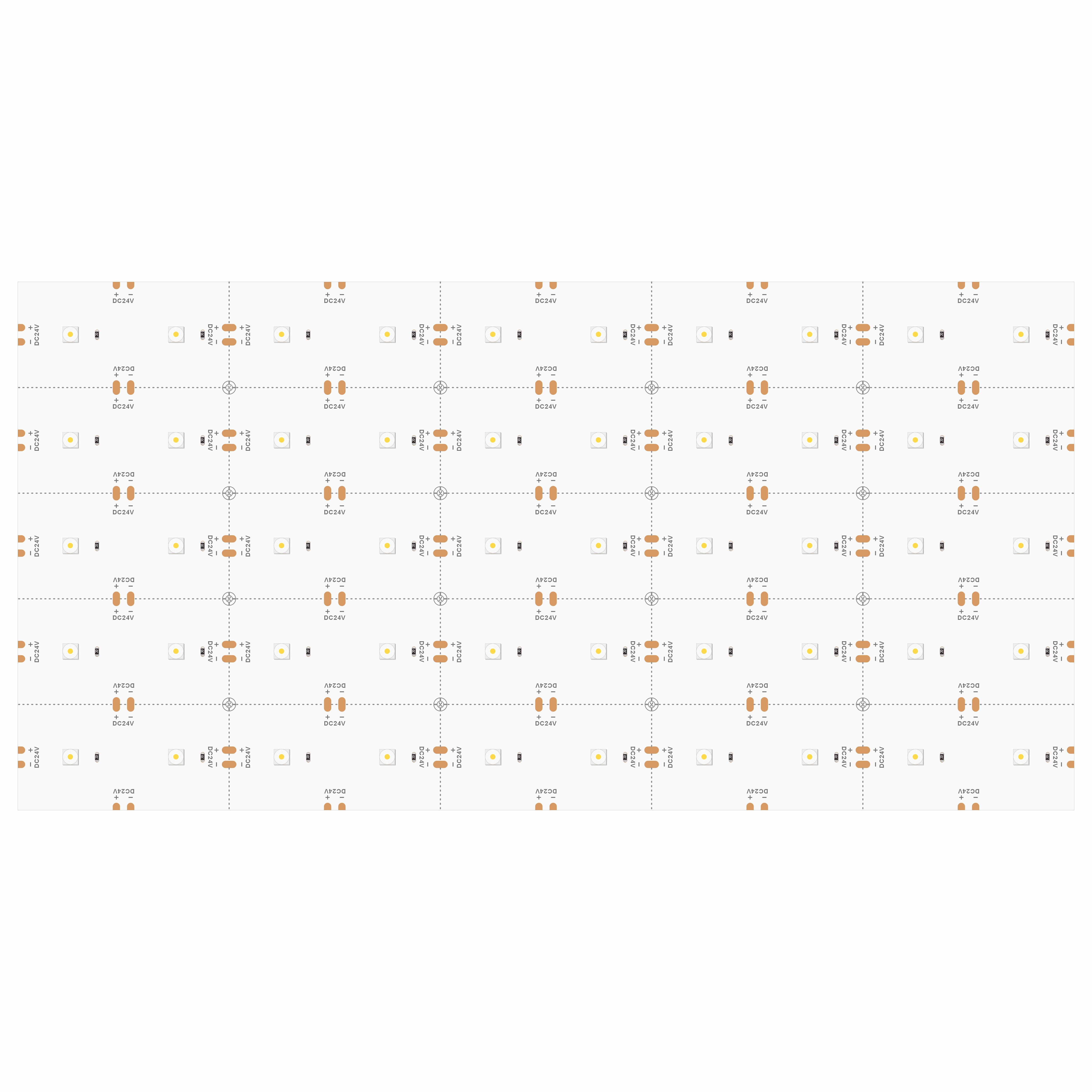
LED Type: 6060 · LED Density: 50LEDs · Voltage: DC 24V · Power: 10~60W · Cutting Unit: 2LEDs/96mm*48mm · PCB Width: 240mm · Copper Foil: 2oz · Circuit Type: CV
17947 — 5050 · 162 LEDs/m · 24V
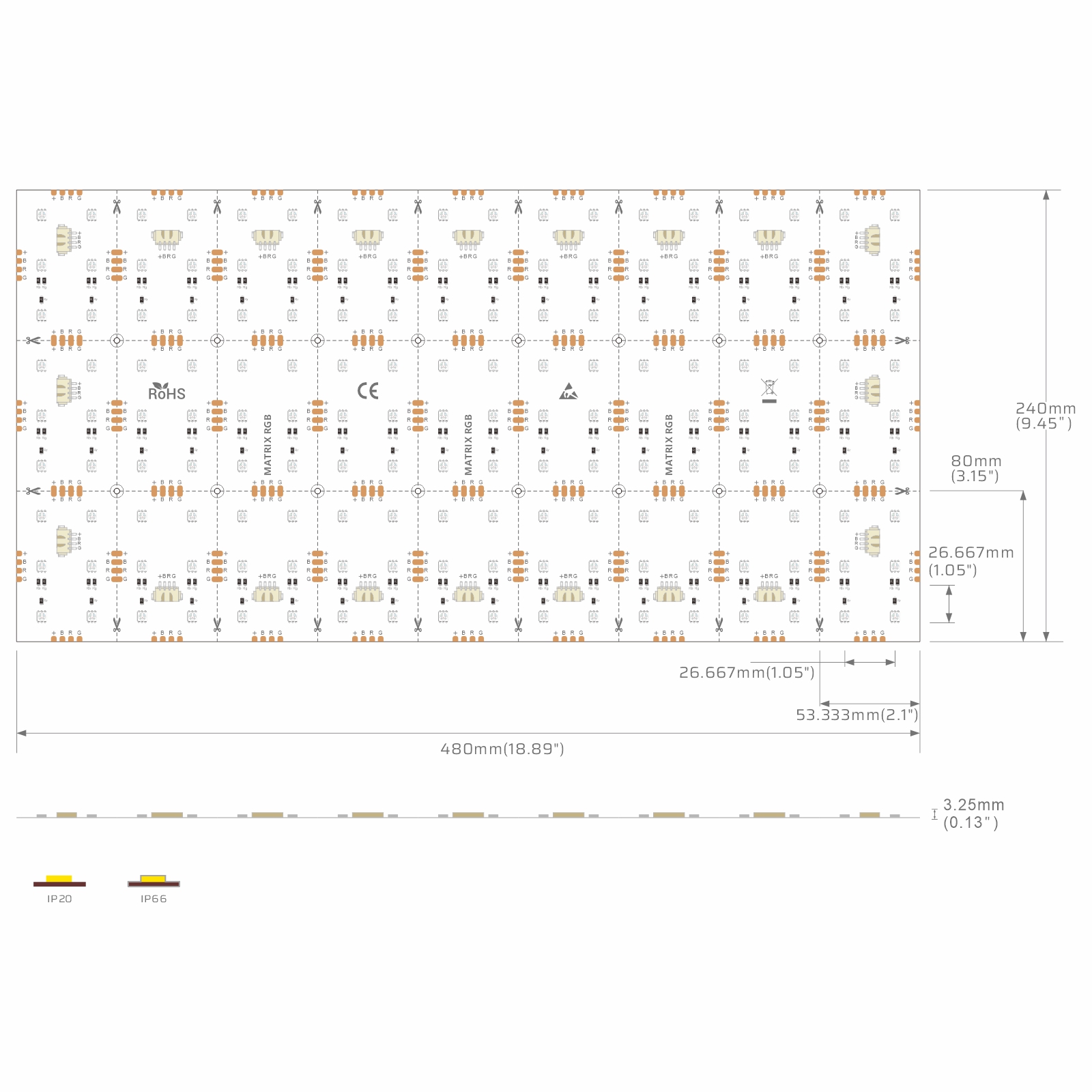
LED Type: 5050 · LED Density: 162LEDs/pcs · Voltage: DC24V · Cutting Unit: 6LEDs/53.333mm · PCB Width: 480*240mm · Copper Foil: 2oz · Circuit Type: CV · IP Rating: IP20/IP65
6600 — 2835 · 576 LEDs/m · 24V
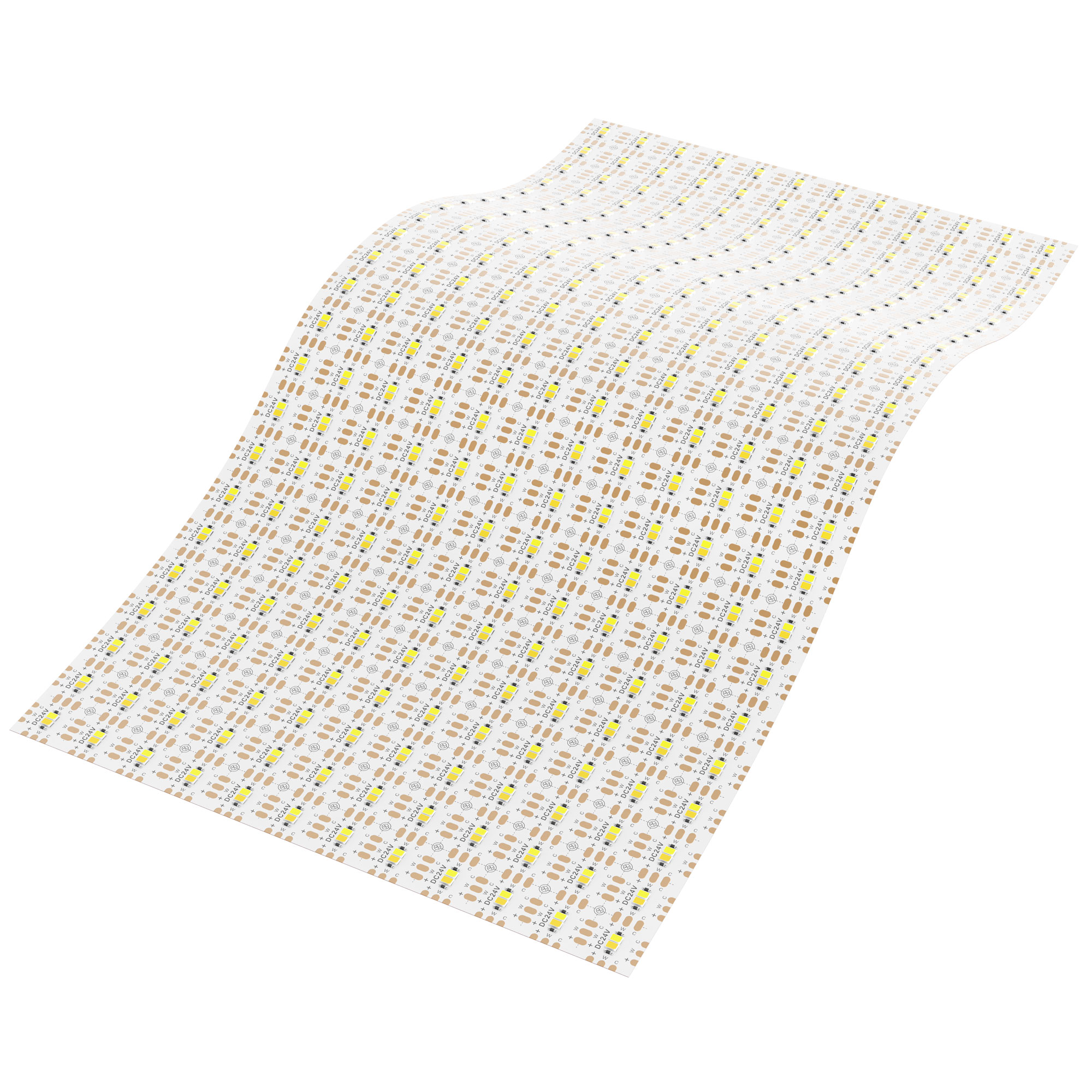
LED Type: 2835 · LED Density: 576 LEDs/pcs · Voltage: 24V · Power: 20~120W · Cutting Unit: 2LEDs/20*20mm · PCB Width: 240x480mm · Copper Foil: 2oz · Circuit Type: CV
6352 — 5050 · 288 LEDs/m · 24V
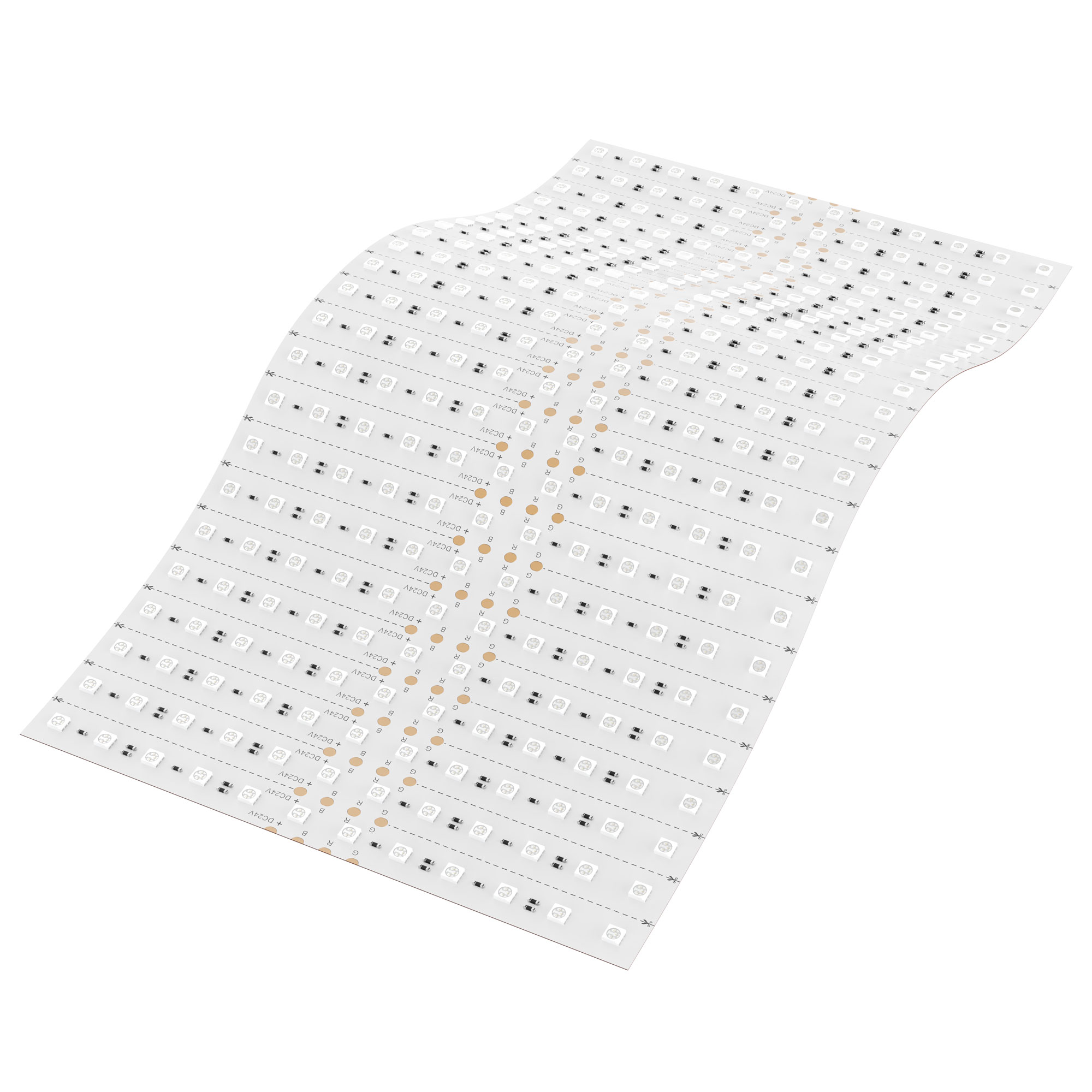
LED Type: 5050 · LED Density: 288 LEDs/pcs · Voltage: DC 24V · Power: 17.2~70W · Cutting Unit: 12LEDs/20*240mm · PCB Width: 240x480mm · Copper Foil: 2oz · Circuit Type: CV · IP Rating: IP20
6433 — 2835 · 288 LEDs/m · 24V
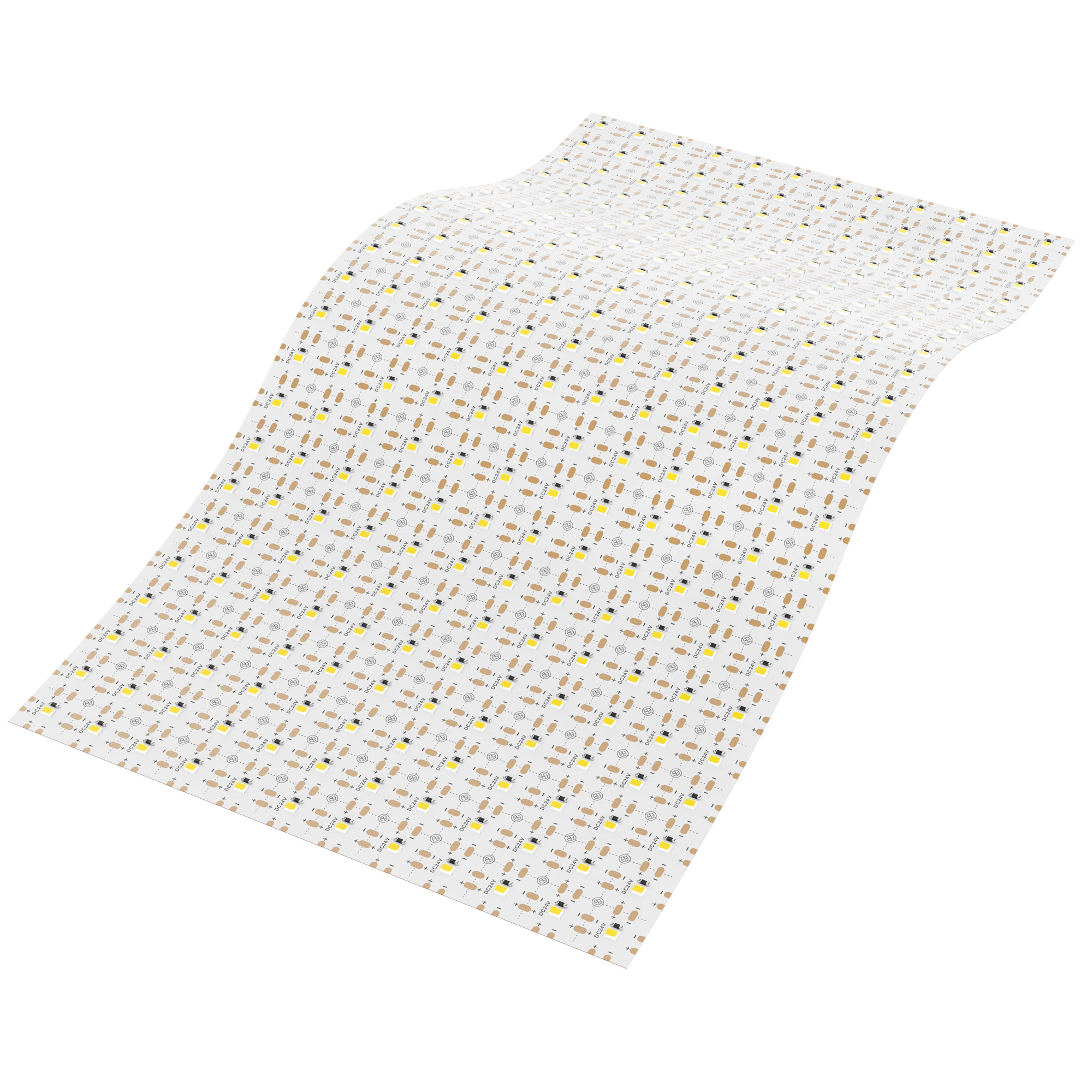
LED Type: 2835 · LED Density: 288 LEDs/pcs · Voltage: DC 24V · Power: 20~138W · Cutting Unit: 1LED/20*20mm · PCB Width: 240x480mm · Copper Foil: 2oz · Circuit Type: C.V. · IP Rating: IP20/IP65
16795 — 5050 · 98 LEDs/m · 24V
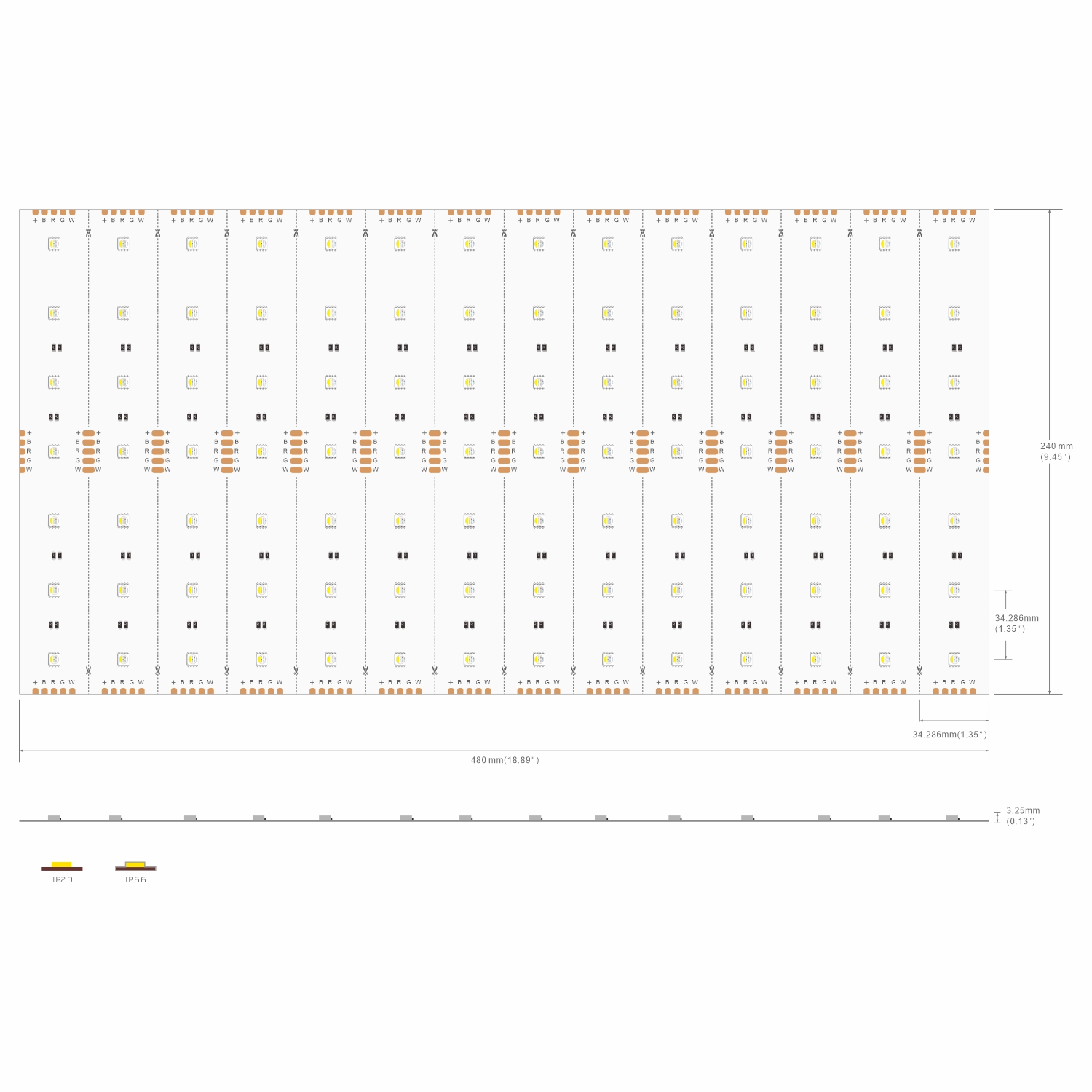
LED Type: 5050 · LED Density: 98 LEDs/pcs · Voltage: DC 24V · Power: 12~26.8W · Cutting Unit: 7LEDs/34.286*240mm · PCB Width: 240x480mm · Copper Foil: 2oz · Circuit Type: CV · IP Rating: IP20
16797 — 5050 · 288 LEDs/m · 24V
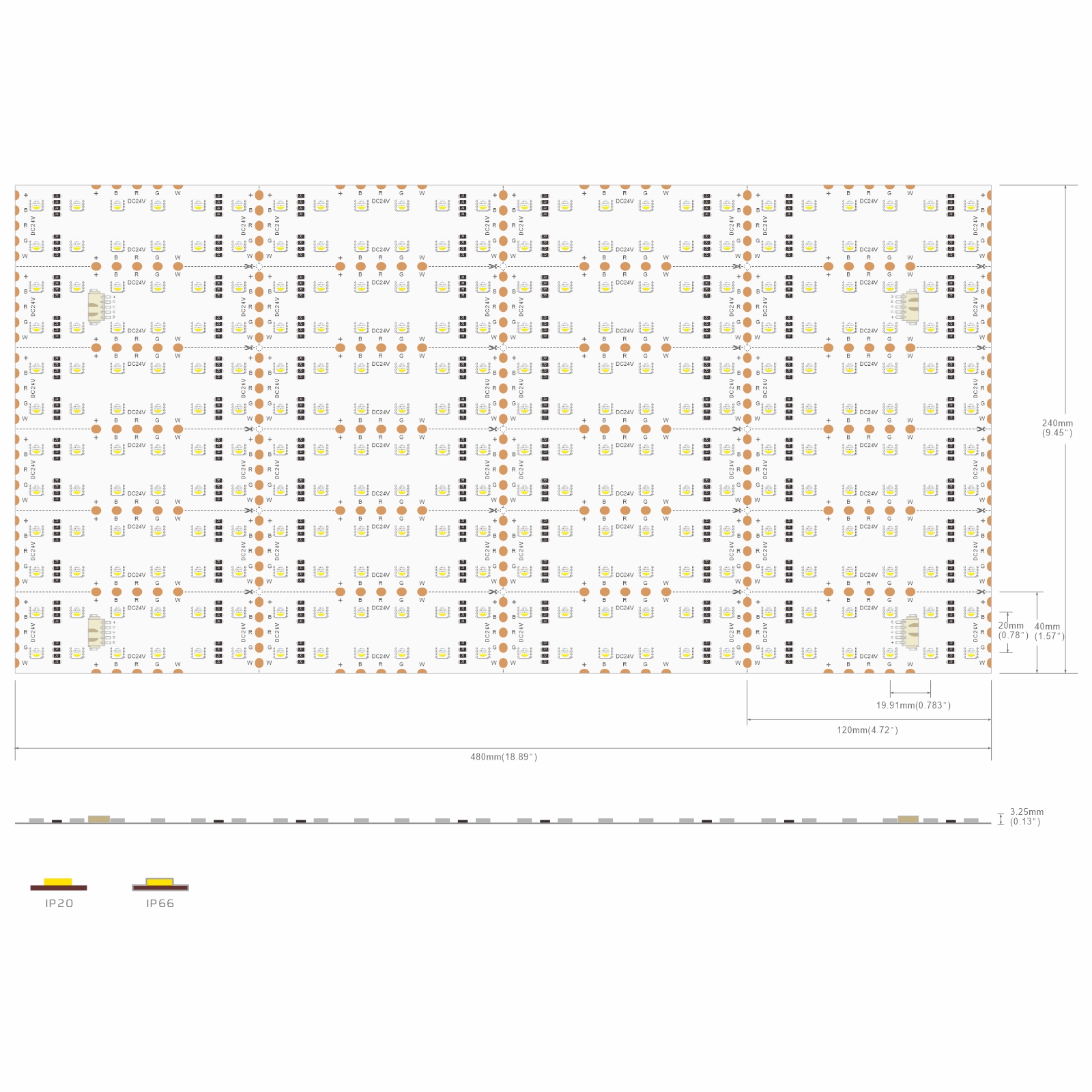
LED Type: 5050 · LED Density: 288LEDs/pcs · Voltage: DC24V · Cutting Unit: 12LEDs/120mm · PCB Width: 480*240mm · Copper Foil: 2oz · Circuit Type: CV · IP Rating: IP20/IP67
16796 — 5050 · 162 LEDs/m · 24V
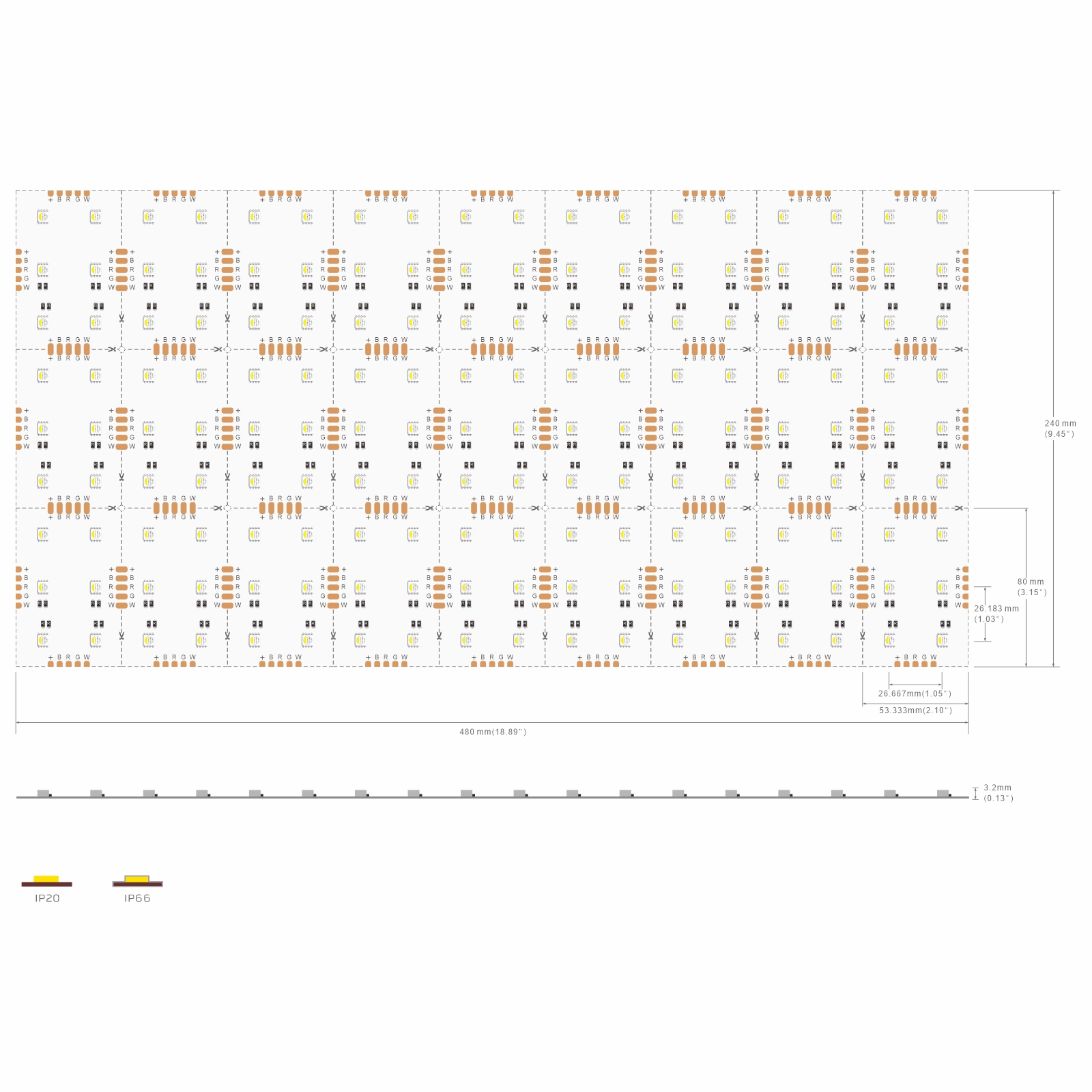
LED Type: 5050 · LED Density: 162 LEDs/pcs · Voltage: DC 24V · Power: 13~50W · Cutting Unit: 6LEDs/53.333*80mm · PCB Width: 240x480mm · Copper Foil: 2oz · Circuit Type: CV · IP Rating: IP20
طرازات لوح LED مرن 12V (1)
6710 — 6060 · 50 LEDs/m · 12V
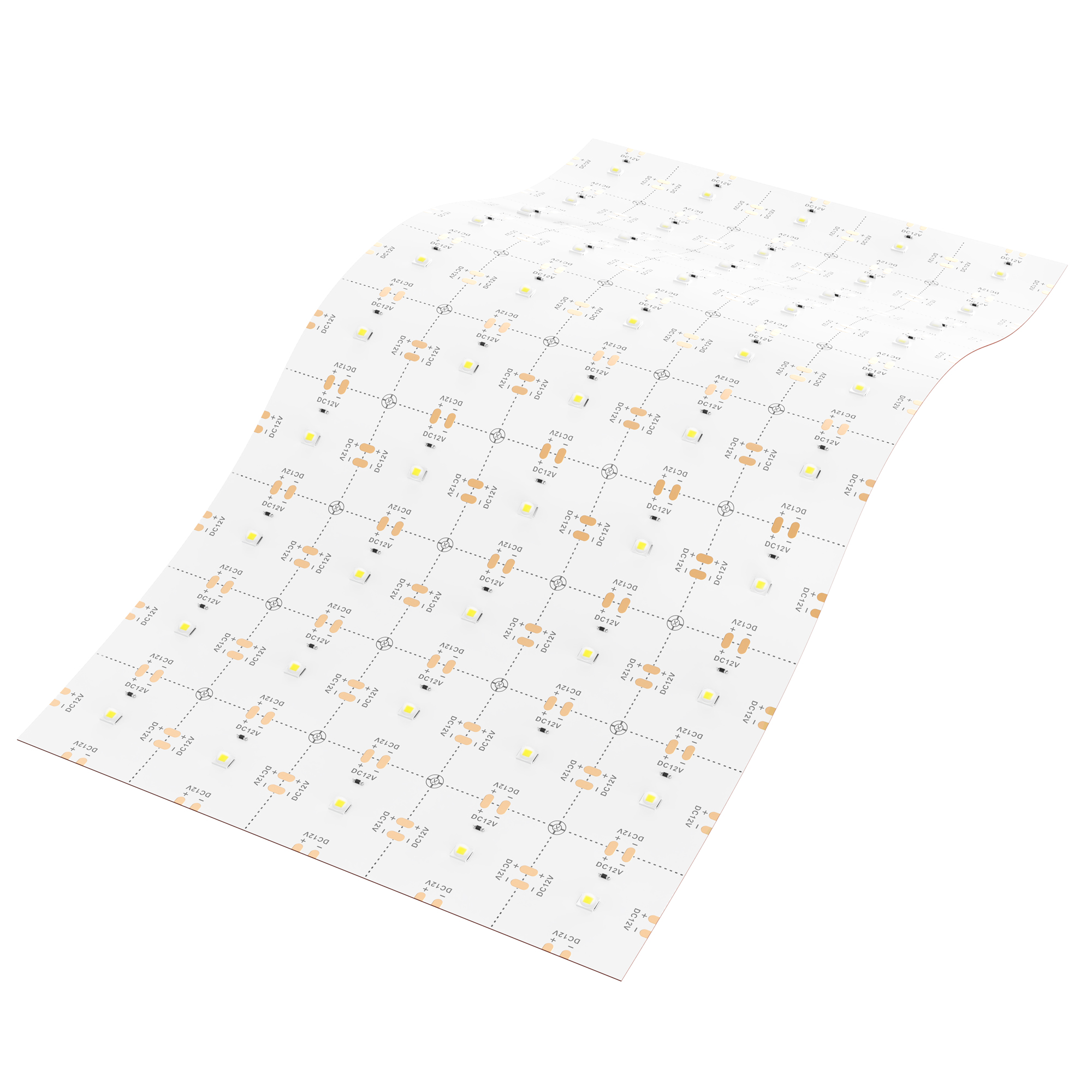
LED Type: 6060 · LED Density: 50 LEDs/pcs · CCT: 2700-6500 · CRI: Ra≥80 · Voltage: DC 12V · Power: 10~60W · Cutting Unit: 1LED/48*48mm · PCB Width: 240x480mm · Copper Foil: 2oz · Circuit Type: CV · IP Rating: IP20
سلاسل أخرى ضمن لوح LED مرن
How to choose an LED sheet: a buyer's decision guide
An LED sheet is specified backwards from the surface it has to light. Decide the application first, then the colour family, then the LED pitch that matches the diffuser depth you actually have, and only then the power feed and cutting grid. This guide walks that sequence for backlit stone, lightboxes, signage and colour walls, using the DENO FlexLite sheet range as the reference set.
| Application | Sheet family | Reference models | Diffuser depth | Why |
|---|---|---|---|---|
| Backlit onyx, marble or translucent quartz | Tunable white | #6600 (2700–6500 K, 234.8 lm/W) | Slab thickness only | Colour temperature is dialled in on site after the slab is installed, and the high efficacy keeps heat out of the stone. |
| Irregular shapes, logos, curved niches | Single colour | #6433 (cut every LED, 20 × 20 mm) | 15–25 mm | The finest cutting grid in the range fills almost any outline, and the offcut modules can be reconnected elsewhere. |
| Slim lightboxes and SEG fabric frames | Wide angle lens | #6105 (24 V), #6710 (12 V) | 40–60 mm | A 160–170° lens spreads 50 LEDs across the full sheet, so a shallow box stays even at a fraction of the load. |
| Backlit signage that is mostly white | RGBW / RGBWW | #16797 (288 LED), #6432 (5-in-1) | 20–40 mm | A dedicated white die renders clean white at lower power while the colour channels stay free for seasonal scenes. |
| Colour walls, stages, exhibition backdrops | RGB | #6352 (288 LED), #17947 (162 LED) | 15–25 mm / 30 mm+ | Sheets tile edge to edge; pick the density from the depth you have rather than from the brightness target. |
Step 1 — start with the surface, not the product
An LED sheet is a component, not a finished luminaire. It is a thin flexible board carrying a grid of LEDs across 480 × 240 mm, built to light a surface evenly from behind. That is why fabricators specify sheets for backlit countertops, lightboxes and signage instead of rigid panel fixtures.
Backlit stone and solid surface
Translucent stone is judged on colour, not on lumens. Use 2700–3000 K for onyx, travertine and amber-veined slabs so the minerals glow, and 4000–6500 K for white marble, quartz and solid surface so the slab does not read yellow. A tunable white sheet removes the guesswork because the setting is made with the slab already in place.
Lightboxes, SEG frames and posters
Here the constraint is depth. Each sheet lights 480 × 240 mm, so roughly nine sheets tile a square metre, and the last row is squared to the frame on the printed cutting grid. Choose 4000–6500 K to keep printed colour neutral; warmer settings shift the whole graphic.
Signage and colour surfaces
If the sign holds white most of the day, an RGBW sheet is cheaper to run and cleaner in colour than mixing white from three channels. If the surface exists to change colour — stage backdrops, exhibition walls, architectural features — an RGB sheet is the correct and lower-cost tool.
Step 2 — match LED pitch to the diffuser depth you have
Most patchy backlit surfaces are not underpowered; they are under-spaced. Dot visibility is decided by the ratio between LED pitch and the air gap in front of the board, so the density decision follows the cabinet, not the brightness target.
20 mm pitch for shallow builds
A 20 mm grid — the 288-LED RGB #6352, the 288-LED RGBW #16797 and the single-colour #6433 — blends within about 15–25 mm of opal acrylic. Halve that gap and the individual dies begin to read as dots.
Coarser pitch when depth is available
The 162-LED #17947 and 98-LED #16795 sit on wider grids, cost less and draw less current. Specify them when there is 30 mm or more behind the diffuser; below that they will show structure.
Lensed sheets for shallow, large-format boxes
A wide-angle lens spreads each emitter across 160–170°, so neighbouring beams overlap close to the board. Fifty lensed LEDs cover a full sheet and keep a slim poster box or fabric frame even from roughly 40–60 mm of depth at a much lower load than a bare-emitter grid.
Step 3 — pick the colour family deliberately
Single colour, tunable white, RGB, RGBW and 5-in-1 RGBWW all tile the same way, but they behave very differently at short diffuser distances and on the electricity bill.
Single colour and tunable white
Available in CRI 80, 90 and 95 plus a full spectrum grade, from 1800 K to 6500 K. Specify CRI 95 or full spectrum wherever stone, product or skin colour is judged at close range. The #6600 reaches 234.8 lm/W, delivering the same light as a market-standard 100 lm/W sheet for roughly 57 % less power — and correspondingly less heat behind the slab.
RGB versus RGBW
An RGB mix always carries a colour cast when asked for white and burns all three channels to produce it. RGBW adds one white die for clean, colour-correct white at lower power. The 5-in-1 #6432 goes further: red, green, blue, warm white and cool white in a single chip, so the white channel tunes from about 2700 K to 6500 K with no colour fringing at short diffuser distances.
Control gear
Any 24 V constant-voltage controller drives these sheets — PWM, RF, Wi-Fi, DMX512 decoders and SPI gateways for show control. What matters is per-channel current: match the controller to the connected load, up to 70 W per RGB sheet.
Step 4 — confirm the cutting grid and the power feed
The last two checks are the ones that cause site problems: whether the sheet can actually reach the shape you need, and how many sheets can hang off one feed before the far end visibly dims.
Cutting grids differ by family
The single-colour #6433 cuts every LED on a 20 × 20 mm square, so an irregular countertop or logo can be filled with almost no waste. The RGBW #16796 cuts on both axes of a 53.3 × 80 mm grid, which is enough to shape around bar backs and display niches. Other RGB and RGBW sheets cut on a single axis between 20 mm and 120 mm because each colour channel must stay complete. Always cut on the marked line so the reconnection pads survive.
Feeds, runs and driver sizing
Plan four sheets from a single-end feed and eight with dual-end input at 24 V; beyond that, start a new run from the driver. Size the supply at the sheet's maximum wattage — up to 138 W for the #6433 and 110 W for the 5-in-1 #6432 — plus 30 % headroom.
12 V or 24 V
12 V suits vehicle interiors, display cases and sites with an existing 12 V supply. 24 V is the default for large cabinets: half the current means less voltage drop, more sheets per feed and thinner conductors across a wide frame.
لوح LED ولوح إضاءة LED — أسئلة المشترين
ما هي صفيحة LED وكيف تختلف عن وحدة الإنارة اللوحية LED؟
لوح LED المرن هو لوحة دوائر رقيقة ومرنة تحمل شبكة من وحدات LED على مساحة 480×240 mm، ومصمّم لإضاءة سطح بالتساوي من الخلف. أما وحدة إنارة LED اللوحية السقفية فهي وحدة صلبة مكتملة؛ في حين أن لوح LED المضيء مكوّن تقصّه وترصّه وتخفيه خلف الحجر أو الأكريليك أو القماش. لهذا يختار المصنّعون هذه الألواح لأسطح العمل المضاءة خلفياً والصناديق الضوئية واللافتات، بدلاً من وحدات الإنارة اللوحية.
هل يمكن قص لوح LED بالمقاس المطلوب؟
نعم — تحتوي كل لوحة LED من DENO على شبكة قص مطبوعة. وأدقها الطراز أحادي اللون #6433، الذي يتيح القص عند كل LED منفرد ضمن مربع 20×20 mm، مما يسمح بتغطية سطح عمل أو شكل شعار غير منتظم دون هدر يُذكر. تُقص لوحات RGB وRGBW بوحدات أكبر (من 20 mm إلى 120 mm) لأن كل قناة لونية يجب أن تبقى مكتملة. احرص دائمًا على القص على الخط المحدد للحفاظ على نقاط إعادة التوصيل.
- Related series لوح LED أحادي اللون قابل للقص عند كل LED
- Product 6433 لوح LED قابل للقص
أي لوح LED هو الأنسب للإضاءة الخلفية لسطح عمل حجري؟
استخدم #6600 ذي الضوء الأبيض القابل لضبط درجة حرارة اللون للأونيكس والرخام والكوارتز شبه الشفاف. يتيح نطاقه البالغ 2700–6500 K تدفئة الضوء للأونيكس الكهرماني أو تبريده للرخام الأبيض بعد تركيب اللوح الحجري، وعند كفاءته الضوئية القصوى البالغة 234.8 lm/W، يحتاج إلى طاقة أقل بنحو 57 % مقارنةً بلوح قياسي في السوق بكفاءة 100 lm/W — مما يعني أيضًا حرارة أقل محتجزة خلف الحجر. وللأعمال ذات اللون الثابت، يوفّر #6433 الشبكة نفسها بمقاس 20 mm مع مرونة القص الحر.
ما العمق المطلوب لصندوق الإضاءة خلف لوح LED؟
يعتمد ذلك على تباعد وحدات LED والعدسة. تمزج لوحة البواعث المكشوفة الموزعة على شبكة بتباعد 20 mm الضوء عند ترك فجوة بنحو 15–25 mm بينها وبين ناشر الضوء. وتوزّع لوحة العدسات واسعة الزاوية، مثل #6710 أو #6105، ضوء كل LED على زاوية 160–170°، لذا يحافظ إطار قماشي بتقنية SEG أو صندوق ملصقات نحيف على تجانس الإضاءة عند عمق يقارب 40–60 mm باستخدام 50 LED فقط لكل لوحة.
- Related series لوح LED بعدسات واسعة الزاوية للصناديق الضوئية
- Product 6710 لوح LED بزاوية إضاءة واسعة
كم لوح LED يمكن توصيله بنقطة تغذية كهربائية واحدة؟
أربع صفائح عند التغذية من طرف واحد، وثماني صفائح عند التغذية من الطرفين بجهد 24 V. بعد ذلك، يخفت ضوء الصفيحة الأخيرة بشكل ملحوظ، لذا ابدأ مسارًا جديدًا من المشغّل. حدّد قدرة مزوّد الطاقة وفق القدرة القصوى للصفيحة — حتى 138 W للطراز #6433 و110 W للطراز #6432 ذي الوظائف 5 في 1 — مع هامش إضافي قدره 30 %.
- Guide حاسبة هبوط الجهد لألواح LED
- Product 10567 لوح LED بجهد 24V
هل تتوفر ألواح LED بإصدارات RGB وRGBW؟
نعم. تدعم ألواح RGB (#6352، #17947) مشاهد الألوان المشبعة؛ وتضيف ألواح RGBW (#16795، #16796، #16797) شريحة مخصصة للضوء الأبيض، لتعرض اللافتة ضوءاً أبيض نقياً نهاراً وألواناً ليلاً؛ ويجمع الإصدار 5-in-1 #6432 بين RGB والأبيض الدافئ والبارد في شريحة واحدة، لإضاءة بيضاء قابلة للضبط دون حواف لونية.
- Related series لوح RGBW LED بإضاءة بيضاء مخصصة
- Related series لوح RGB LED للمشاهد اللونية
- Product 6432 لوح RGB LED